
Most city builders reward growth. More houses lead to more workers, more production chains, and eventually more stability. Roman Triumph: Survival City Builder deliberately rejects this assumption. Instead of treating expansion as progress, the game frames growth as risk. Every new district, citizen, or supply chain introduces new vulnerabilities that can collapse the entire settlement if not supported correctly. This article examines how Roman Triumph transforms city building into a survival-driven experience by designing scarcity, logistics, and cascading failure as the core of its gameplay loop.
1. The Illusion of Safety in the First Settlement
The opening phase feels deceptively forgiving.
Resources are plentiful, population demands are limited, and threats appear distant. Players are encouraged to build freely and experiment.
This early comfort establishes expectations that the game will later dismantle, making subsequent failures feel earned rather than arbitrary.
2. Population as a Liability, Not a Reward
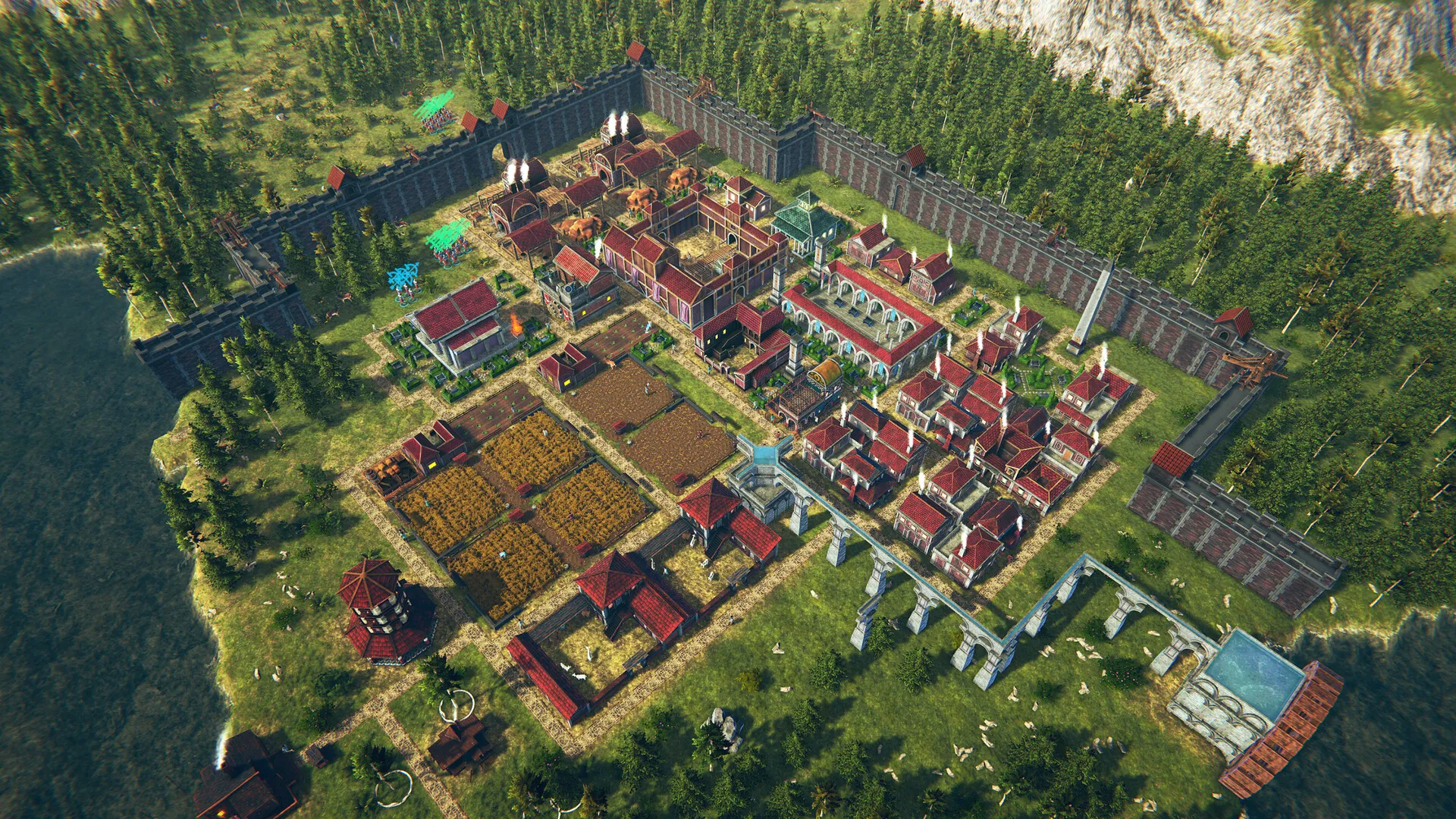
In Roman Triumph, citizens consume before they contribute.
Each new inhabitant increases pressure on food, housing, sanitation, and security systems.
Growth without buffers
Unchecked population growth accelerates collapse rather than prosperity.
3. Scarcity Is Systemic, Not Random
Resource shortages rarely come from bad luck.
They emerge from interdependent systems failing under strain, such as delayed transport or seasonal production gaps.
Predictable fragility
Players can anticipate disaster, but only if they understand the systems deeply.
4. Logistics as the Hidden Difficulty Curve
Transport routes quietly define success or failure.
A distant farm may technically produce enough food, but delivery delays can still starve urban districts.
This forces players to think spatially rather than numerically.
5. Production Chains and Compounding Risk
Each additional production layer multiplies potential failure points.
Raw materials, processing buildings, storage, and labor must all align.
Complexity without automation
The game resists simplifying late-game logistics, maintaining constant pressure.
6. Time Pressure and Seasonal Vulnerability
Roman Triumph introduces cyclical stress through seasons.
Harvest windows, winter shortages, and labor shifts prevent static solutions.
Temporal planning
Success depends on preparing for future scarcity, not reacting to present abundance.
7. Military Presence as Economic Drain
Defense is not optional, but it is expensive.
Soldiers consume resources without contributing to production.
Protection versus productivity
Over-militarization can be as dangerous as neglecting defense.
8. Cascading Failure as Core Feedback
Failure rarely happens in isolation.
A single shortage triggers unrest, which disrupts labor, which worsens shortages.
Collapse with momentum
Once decline begins, recovery requires decisive intervention.
9. Player Psychology and Risk Aversion
The game conditions players to fear expansion.
Every new building is a calculated gamble rather than a step forward.
Survival mindset
Players learn restraint, patience, and redundancy.
10. Why Stability Feels Like Victory
Roman Triumph reframes success.
A stable city that does not grow rapidly feels more rewarding than explosive expansion.
This redefinition aligns survival with mastery rather than scale.
Roman Triumph: Survival City Builder distinguishes itself by refusing to equate growth with success. Through tightly interlocked systems, deliberate scarcity, and cascading consequences, it transforms city building into an exercise in restraint and foresight. Expansion becomes a risk management problem, and stability becomes the true measure of mastery. By doing so, the game challenges conventional city-building instincts and rewards players who learn to survive rather than dominate.